The Sound Mirror
Living close to the seafront of historic Deal, long-term resident Bill Elliott made a
bequest in his will ‘to create a work of art that would enhance the beauty of the
town’. Deal Town Council invited ideas for a ‘beautiful installation that would stand for generations to come’.
From many submissions, a proposal for a sound mirror was chosen, designed by Deal artist Michael Bennett.
bequest in his will ‘to create a work of art that would enhance the beauty of the
town’. Deal Town Council invited ideas for a ‘beautiful installation that would stand for generations to come’.
From many submissions, a proposal for a sound mirror was chosen, designed by Deal artist Michael Bennett.
© Michael Bennett 2026
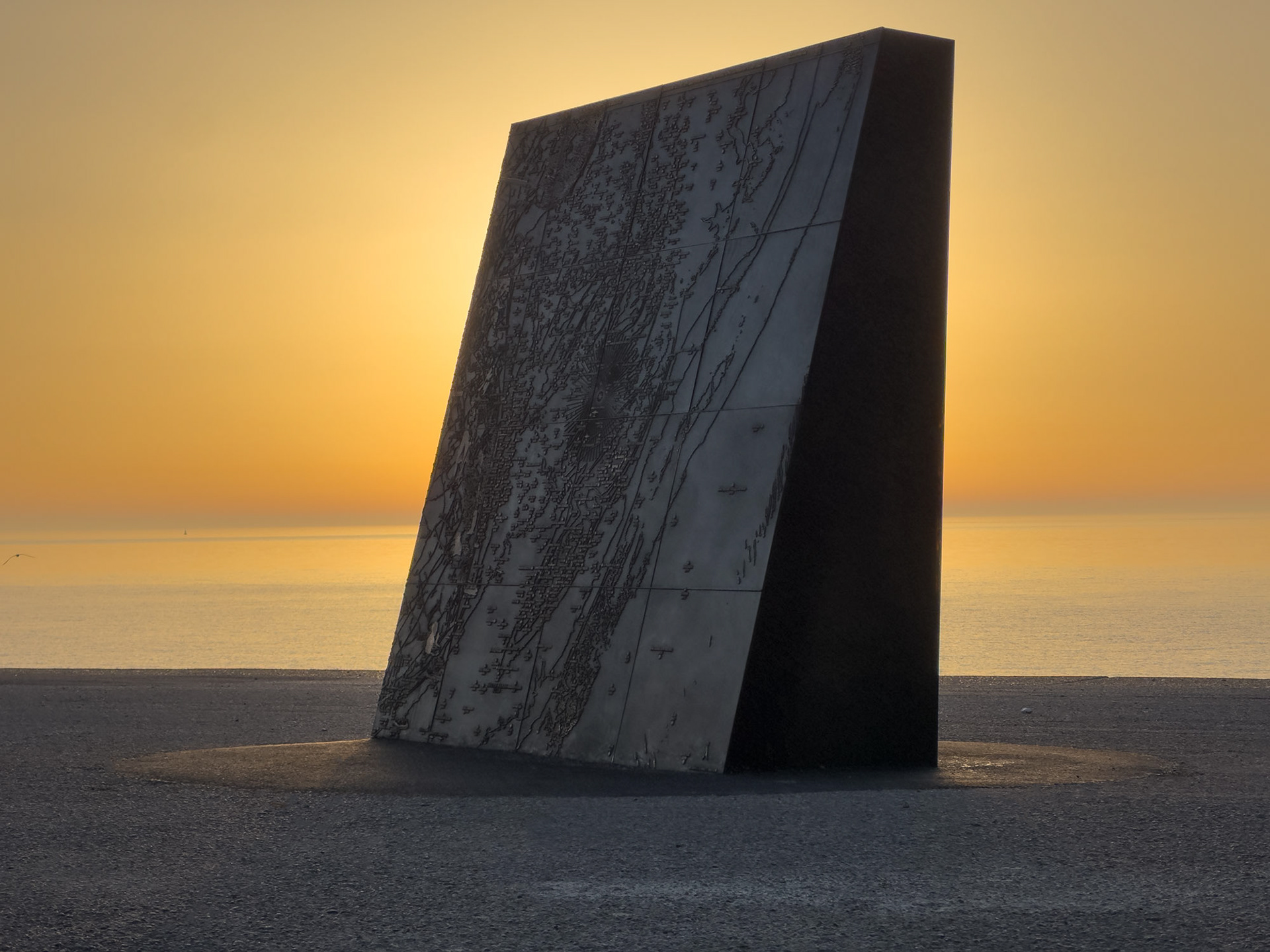
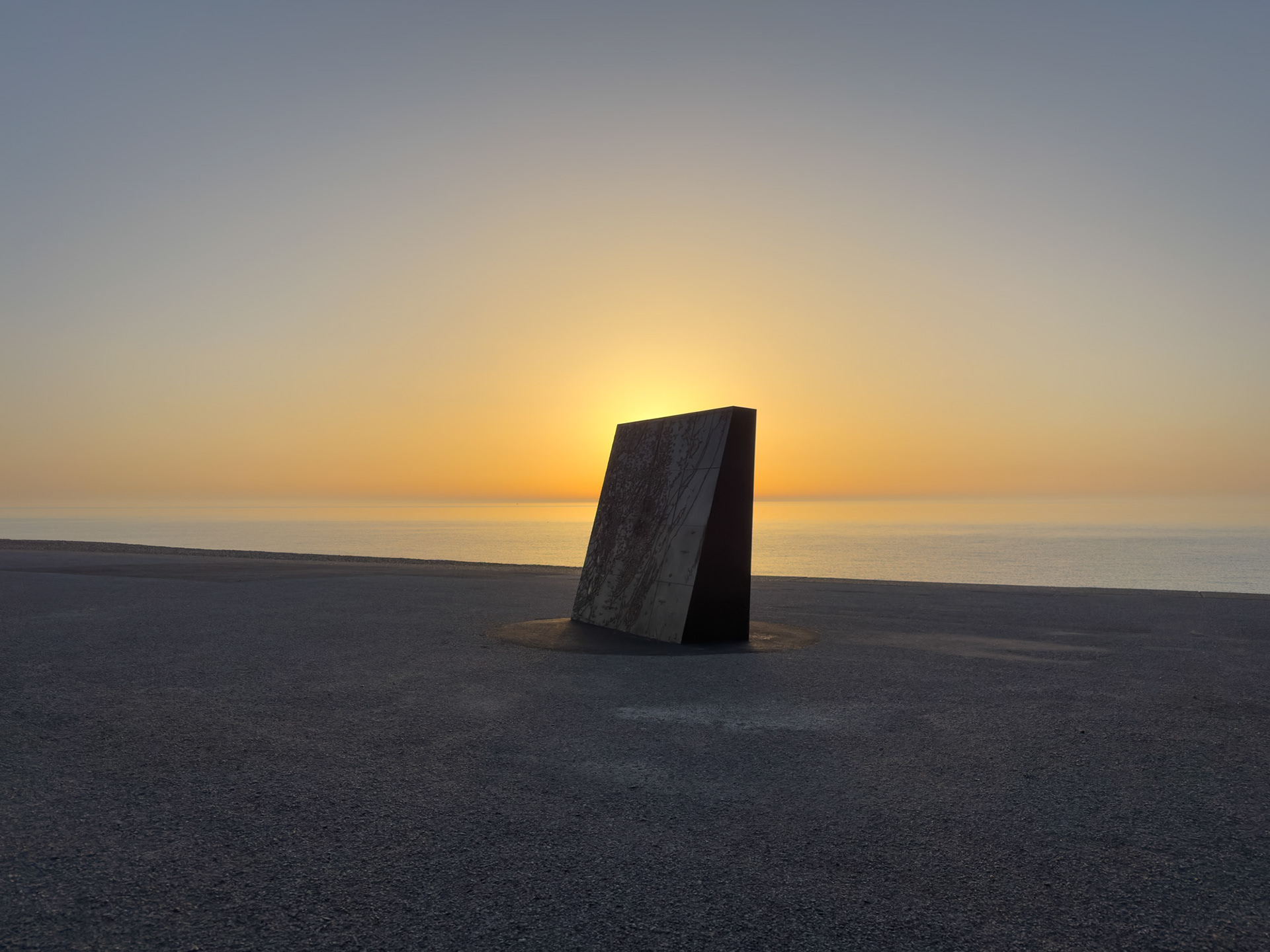
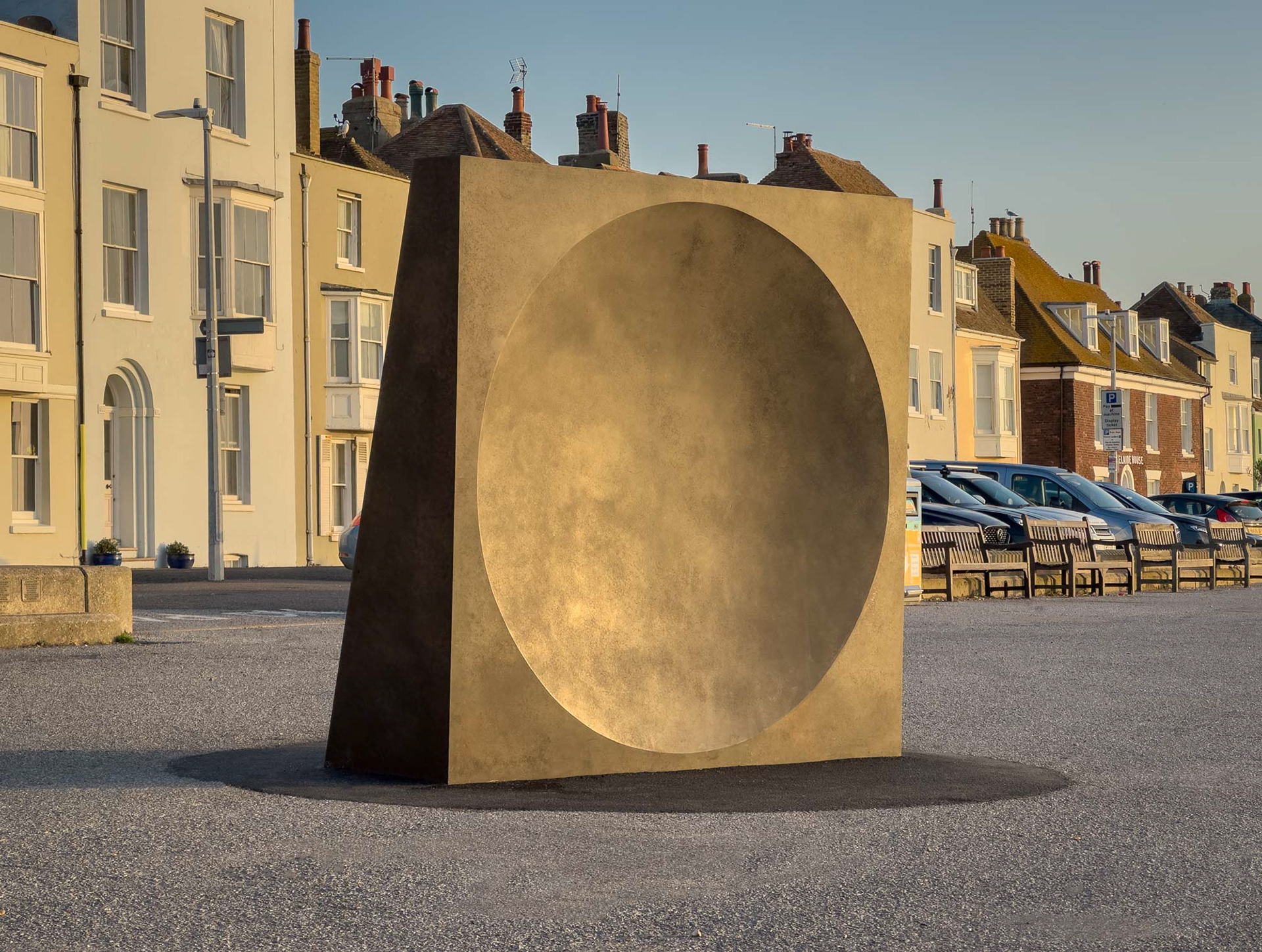
Sound Mirror is a 1.78m (6 feet) high bronze with a sound reflecting dish on one side, oriented towards the sea. It enables those standing in front of it to hear amplified sounds of the sea and have any sound they make to be reflected back magnified.
To the rear, sculptor Michael Bennett created a map of East Kent’s coast and sea,
showing hundreds of years of wrecks, places and people with a connection to the area, including Lady Hamilton, Winston Churchill and Ian Fleming.
To the rear, sculptor Michael Bennett created a map of East Kent’s coast and sea,
showing hundreds of years of wrecks, places and people with a connection to the area, including Lady Hamilton, Winston Churchill and Ian Fleming.
© Michael Bennett 2026
Finding that many previous maps of Goodwin Sands shipwrecks were inaccurate, Michael set out to create a map showing wreck sites of ships, submarines, sailing boats and planes in their last recorded positions. More than two thousand vessels are thought to have sunk in the area of the
Goodwins over many centuries. Seven hundred are shown, the earliest being Dolphin, sunk in 1585, the latest Glevon, in 2005. Piecing together data from many different sources was a challenge. With the help of Paul Day, a bathymetric mapping specialist, the Goodwin Sands Preservation Trust and artificial intelligence, Michael drew a new, finely-detailed map, cast in bronze. Much more wreck data is available on the project’s website dealsculpture.com
Goodwins over many centuries. Seven hundred are shown, the earliest being Dolphin, sunk in 1585, the latest Glevon, in 2005. Piecing together data from many different sources was a challenge. With the help of Paul Day, a bathymetric mapping specialist, the Goodwin Sands Preservation Trust and artificial intelligence, Michael drew a new, finely-detailed map, cast in bronze. Much more wreck data is available on the project’s website dealsculpture.com
© Michael Bennett 2026
Sound Mirrors were constructed between the two world wars, mainly along the south coast of the UK, to listen to the sound of incoming enemy aircraft, allowing early warning of possible attack. Many of the concrete structures still exist, in varying states of preservation. Most are open to the public, such as the three mirrors at Greatstone, Kent, built between 1928 and 1930. The technology was redundant by 1935, with the invention of radar.